Hello to the 5 maybe 6 people who still read my blog…
I felt like doing a little update + celebration today so let’s go, shall we?
Today I published my 10th episode of Open Book With Ash! (*insert clapping and cheering here)
I am definitely proud of the fact that I have stayed the path.
One could say it started off a little rocky. Or that I decided to set a goal and life was like, “hold my beer” and threw me some curveballs to see how committed to the goal I really was….
How committed was I, you ask? Well let’s see….
I literally recorded my intro like 10 times and I still may go back and redo it because I am not sure it REALLY captures the essence of what I am going for with the podcast (but “the essence” is really unfolding as I go).
To keep the timeline I set for myself, I ended up recording the first couple of episodes from FL at my parents after my mom had a medical emergency and I had to fly down there unexpectedly. I packed my mics. That’s how committed I was.
I recorded during the emotional rollercoaster of dropping my oldest and first born off at college 5 hours away for his freshman year (my emotions would have rather me stay under a blanket on my couch).
I recorded an episode post getaway with Aaron even though I came home sick AND most recently, I recorded THEN RErecorded my 10th episode after my mic did not work.
So to say I have overcome adversity in order to keep the ball rolling would be an understatement. And that is part of the reason I am doing this podcast to begin with…to rebuild a trusting relationship with myself, to remember I can do things EVEN WHEN life is LIFEing and to rediscover who I am when I’m not confined to algorithms and word counts among other things. (I will be doing an episode on the rediscovering bit so be sure to follow the podcast!) And also just to do something for me as I enter into this new season of life with one kid away and one kid who spends her time at school or dance.
And the other thing I wanted to share is why I picked the name Open Book with Ash.
There are 3 reasons why…
One: I'm an open book. Some would say I overshare and I agree but it is not a trait I dislike about myself but there are definitely times I leave after meeting new people, and I'm like, why did I just say that? And sometimes, Aaron looks at me and goes “you said the quiet part out loud.” I think (and know from DM’s, conversations, etc.) that many people have loved following me online for years because I do my best to keep it real and authentic in my space. I share everything I can within reason because some things are obviously meant to be private. But I don’t sugarcoat things. I am pretty straightforward and either you love me or hate me for it. Either way, that is none of my business. I’m just here to do me (AND relearn that is enough, again podcast to come on this…).
Two: I love books. And books contain stories. Sharing stories is how we connect, it's how we feel seen and how we have those moments that are like, “oh shit, that's me.” Like “she is going through the same thing as me.” Common human experiences = connection. Think about it - stories shared amongst women around a table (said in my best British accent) during girls night out often let us know that we're a little less alone in life. And that is also definitely a goal of mine around here.
Three: This is one of my favorite things to talk about. Everything in our life that we have right now is created from stories. Again, whether it's related to our relationships, parenting, our own bodies, it's all created from stories. Andthe life you want is also created from stories. These stories can move us towards the shit we want, or it can keep us stuck. And most of us have never stopped to question where these stories come from. And sometimes just hearing a story out loud, whether it's my story or a story I've walked women through as a coach, it's exactly what you need to see where maybe you've got a story in your life that's similar and you get to decide is this working for me or is this something that's just been running the show for a little too long and I'm ready to let it go.
I don’t see those 3 pillars going away because they ARE the backbone of why I picked the name but I do see me getting more fun and creative with the delivery as time goes on and I learn more about the podcasting world. AND as I let my freak flag fly a little more freely. Ha!
So if you are following along, thank you. I appreciate you. If you tried an episode in the beginning and haven’t been back, come back…try again.
My top 3 fav episodes so far are:
The “Diet Culture Deadline”
Bonus Episode: Doing the Thing…Even When Life is Life-ing
And we are counting these as 1…LOL:
Your Stories (Self Limiting Beliefs & Shitty Self Talk: Part 1
Your Stories (Self Limiting Beliefs & Shitty Self Talk: Part 2
If you are following along and love it, don’t forget to leave a review or share your fav episode with a friend!
Chat soon(ISH).
Xoxo,
Ash
Life Updates! It's Been a Minute.
I feel like every so often we get to this point where I am like, “oh hey, you have a blog - you should go update people.” And then I wonder, who are the people…is anyone out there, reading this? If so, hi. Hello. If not, this will be a little space I can come back to for memories and to reflect on all the things.
So…I have some updates to share.
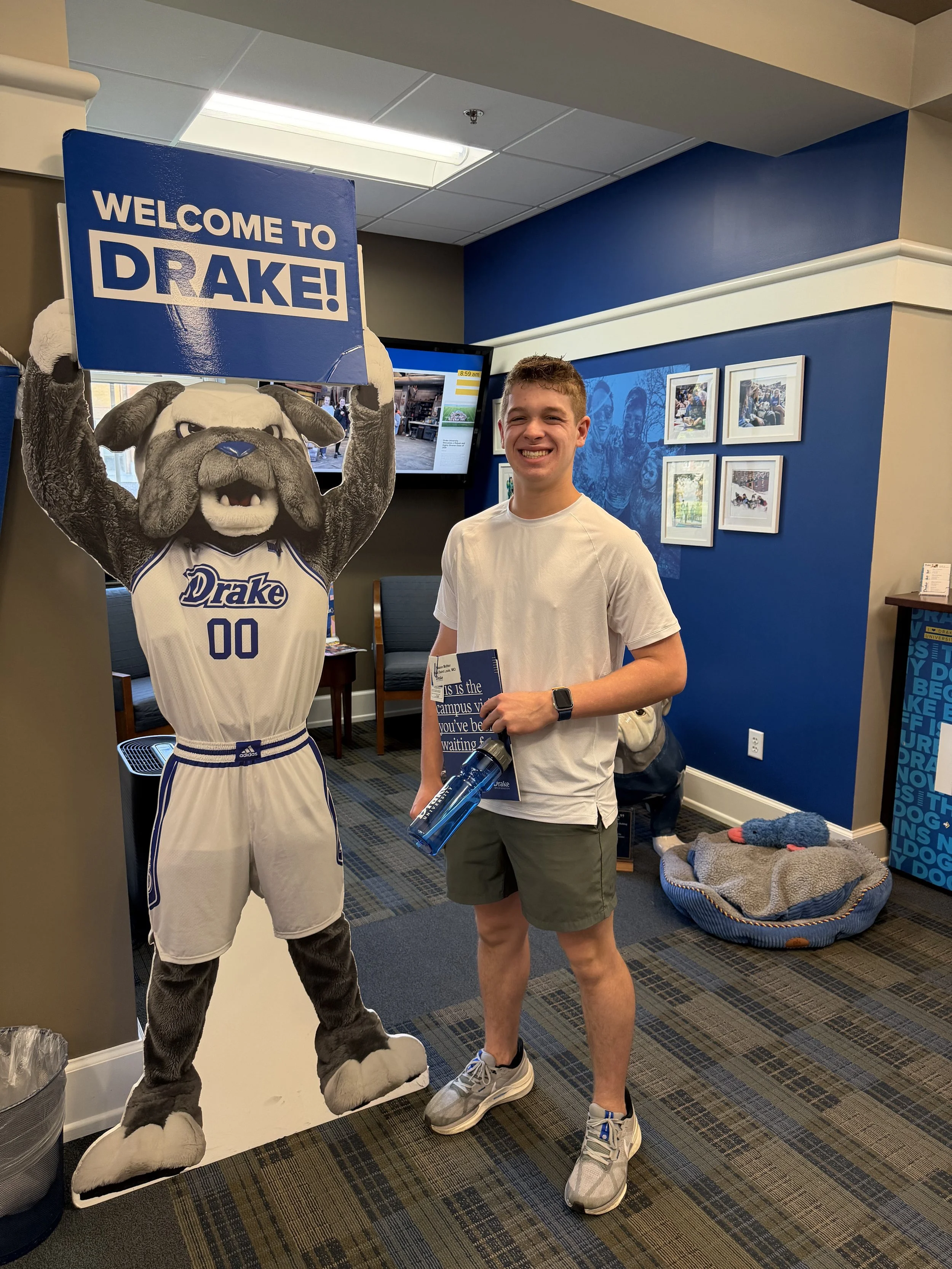
First and foremost…my “baby” is going to college next week. 5 hours away. And he’s focusing on Sports Broadcasting. I really am beyond excited for him and also, obvi, my mom heart is sad he is all grown up. I will be sharing more of this season of motherhood as I navigate it.
And my other “baby” is headed into 7th grade. She made the MS dance team and is doing Comp team at her studio again so she is busy. If she is not dancing, she is on the phone with her friends.
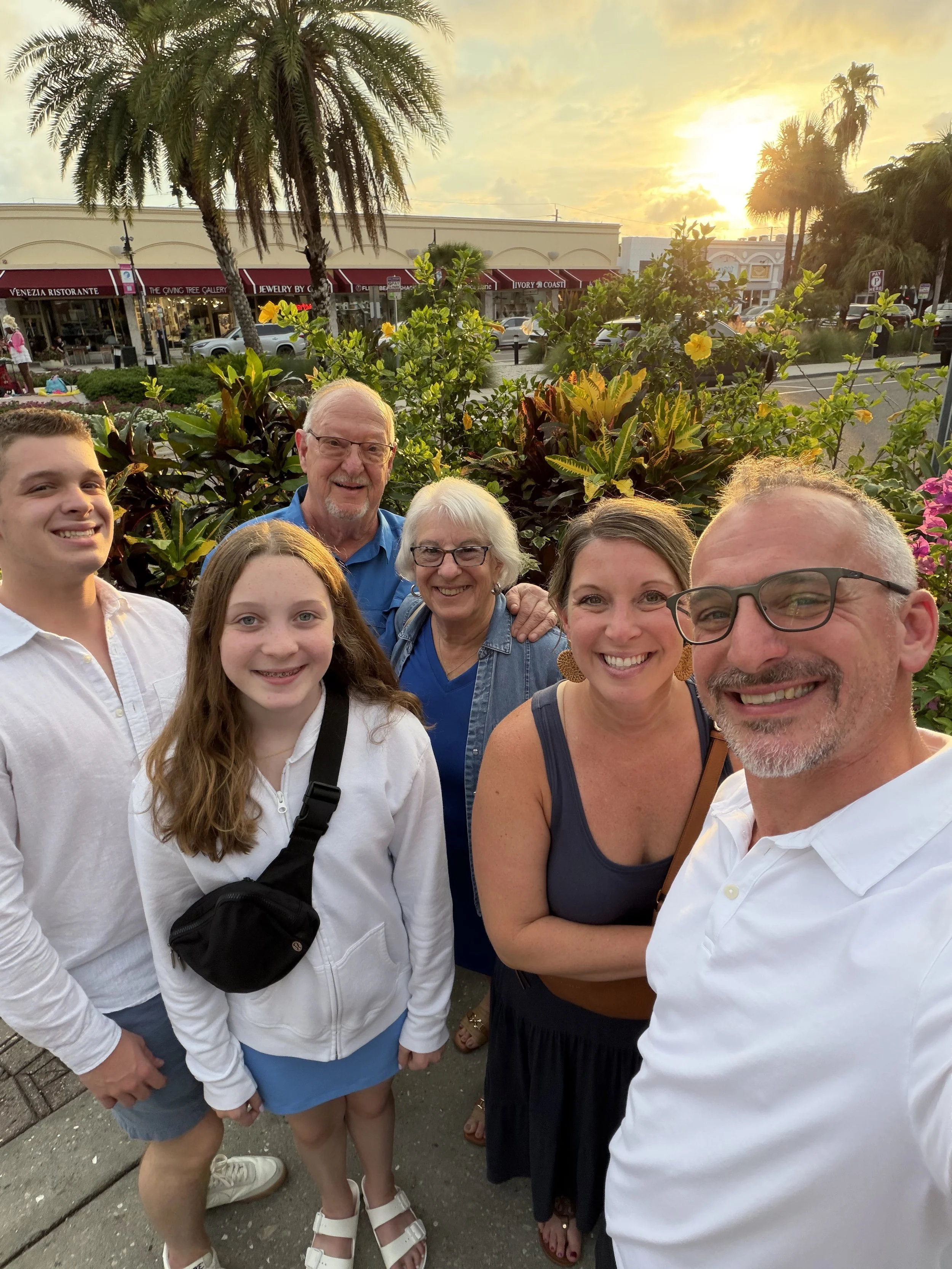
We just recently got back from the vacation we squeezed into our packed summer - between baseball and dance - my last minute planning and family vote landed us at Universal for 5 days and my parents house in FL for 5 days. It was the perfect vacation combo.



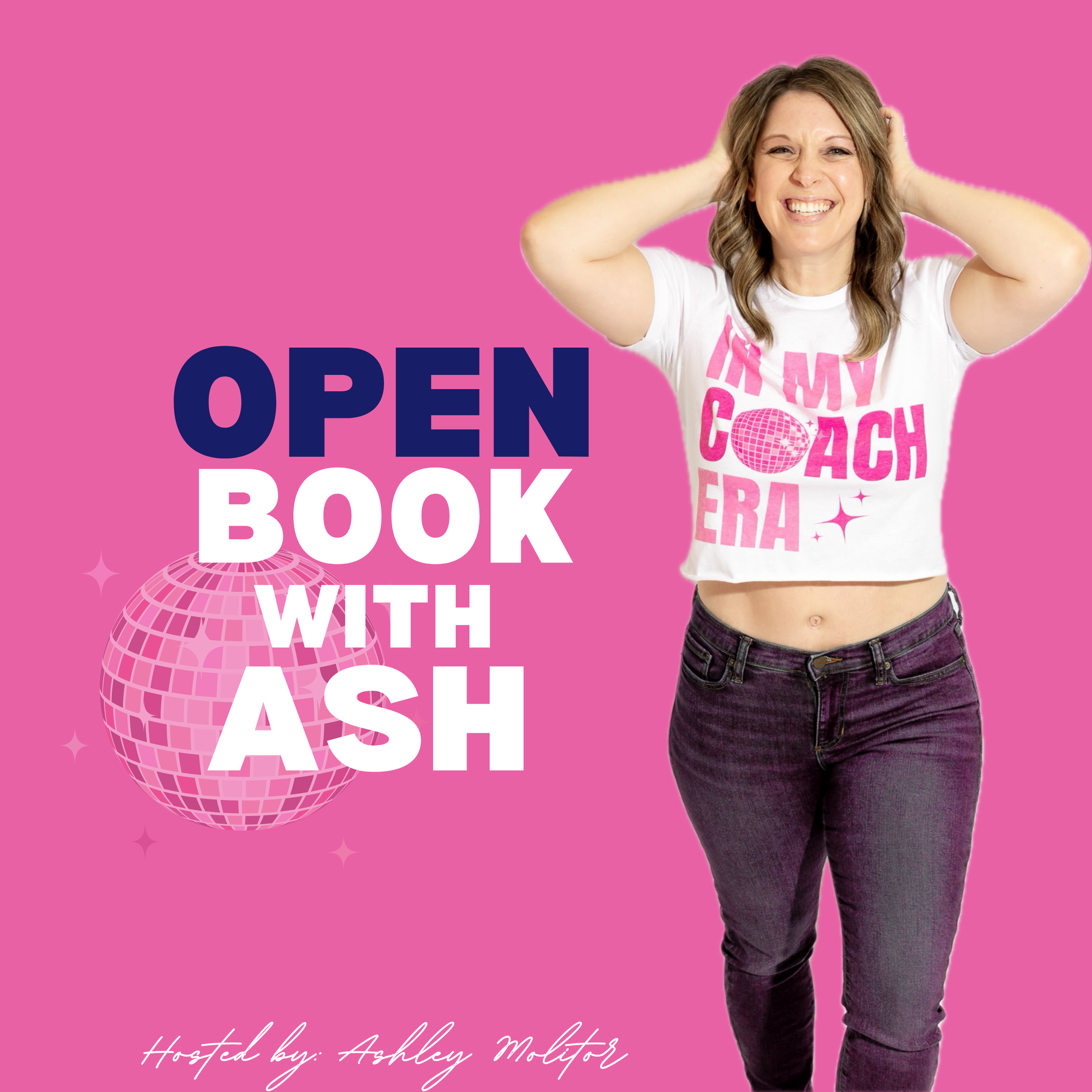
And outside of all of that…I started a passion project.
When I was younger, I talked a lot.
Now I'm older and I still have a lot to say.
So why not turn that skill into a podcast?!😆
But in all seriousness, I went through phases growing up where I was certain I'd be an actress, then I thought maybe I'd go into radio...then it all shifted and actually turned into the behind the scenes work, like being a production assistant for concerts.
And one day I decided to go get a 9-5 and left all of that behind.
But if we slow down long enough to listen, life has a funny way of giving us little nudges to get back to our most authentic self.
And once I left corporate America, new opportunities were presented to me and each one has led me here, to this place where I can see how the vision I had when I was younger is still possible, just through a different avenue: a podcast.
This passion project is a way to remind me that even if I wasn't brave enough to do the things I thought I'd do when I was younger, I can still do a version of those things now.
It's still new. I'm still catching my bearings.
But as someone who loves to talk, loves to share, teach and inspire and always pictured herself doing something with a mic, camera or audience - this is my way to do just that.
If you so choose, to come along with me as I find my groove as a podcast host, thank you. And if you stumble across an episode you love, be sure to leave a review or share with a bestie.
🎙️You can find Open Book with Ash on Apple or Spotify!
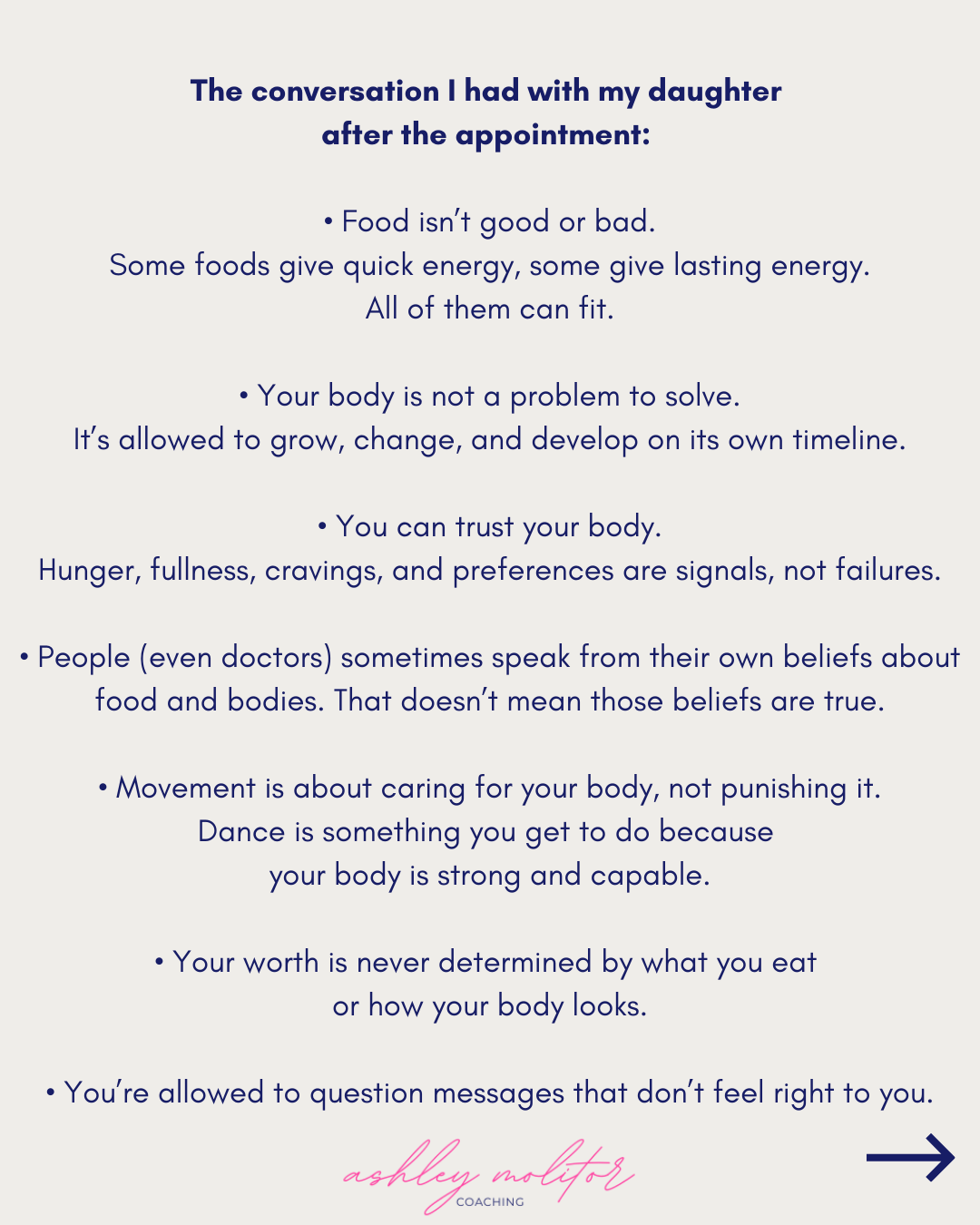
A Routine Checkup with an Agenda
Last week I took my 12-year-old to a routine doctor’s appointment.
What was supposed to be a basic checkup turned into a conversation about food, her body and a whole lot of comments that were someone else's beliefs disguised as concern.
Stated so matter-of-factly and in a tone that both she and I agreed felt like a personal attack.
And at 12, you’re figuring it all out. Not to mention starting to see messaging all around you.
Sometimes a few off-hand comments from an adult... a doctor, coach, or parent are all it takes to start the story.
The story that says:
"My body isn't quite right."
"I should probably fix it."
Because the message underneath those comments from her doctor was loud and clear.
It's the same message girls and women hear everywhere:
Your body determines your worth.
And how you eat makes you good or bad.
But here's what kept running through my mind afterward...
Most women didn’t wake up one day hating their bodies.
The story started somewhere.
In messaging all around us... social media, the diet industry, movies, TV, casual conversations...
And in small comments like these, that quietly planted shame around food or bodies.
Comments that slowly become a story you carry about yourself.
At home, we try to mirror a healthy relationship with food and our bodies.
But I'd be lying if I didn't say this wasn't always the case.
I grew up in the same world most women did, where dieting, food guilt, and body criticism were just the background noise of life.
Which means I know firsthand how easy it is to miss how these messages land on our kids.
But after we left that appointment, I knew it mattered to say something.
So we talked.
Because sometimes the most important thing we can do as parents is help our kids separate someone else’s beliefs from their own relationship with their body.
But here’s the thing.
Most of us didn’t grow up learning how to trust our bodies.
So sometimes we don’t even realize when those same messages show up around our kids.
And sometimes they come from places we’re taught to trust.
Which is why doing our own work around food and body image matters because when we start to see the stories we were handed we get the chance to decide whether or not we keep passing them on.
Sometimes the body story starts in moments like these...at a routine check up.
And if we’re paying attention, it’s also where we get the chance to interrupt it.



What a $3,000 Espresso Machine and Coaching Have in Common
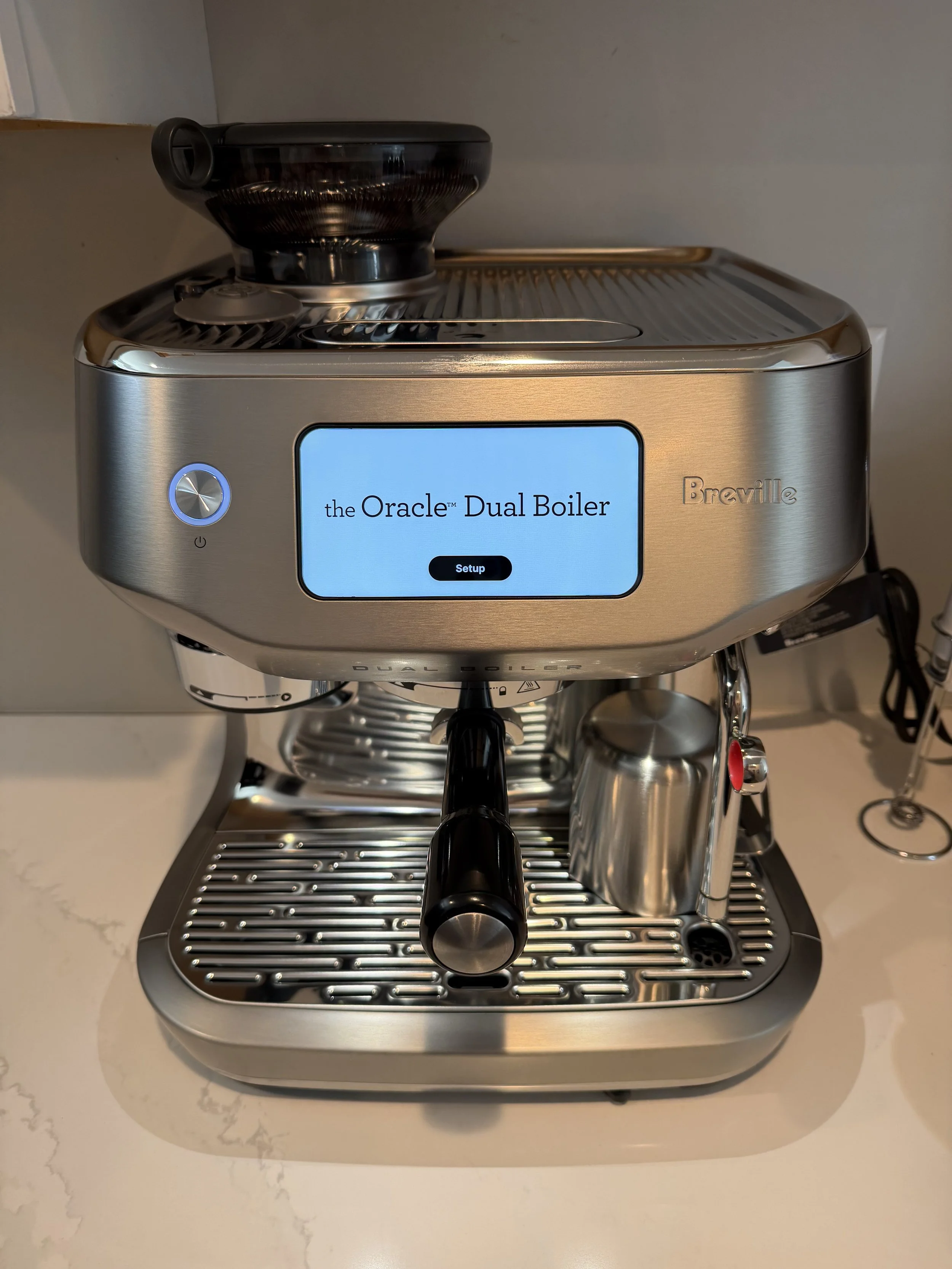
We just spent $3k replacing our espresso machine.
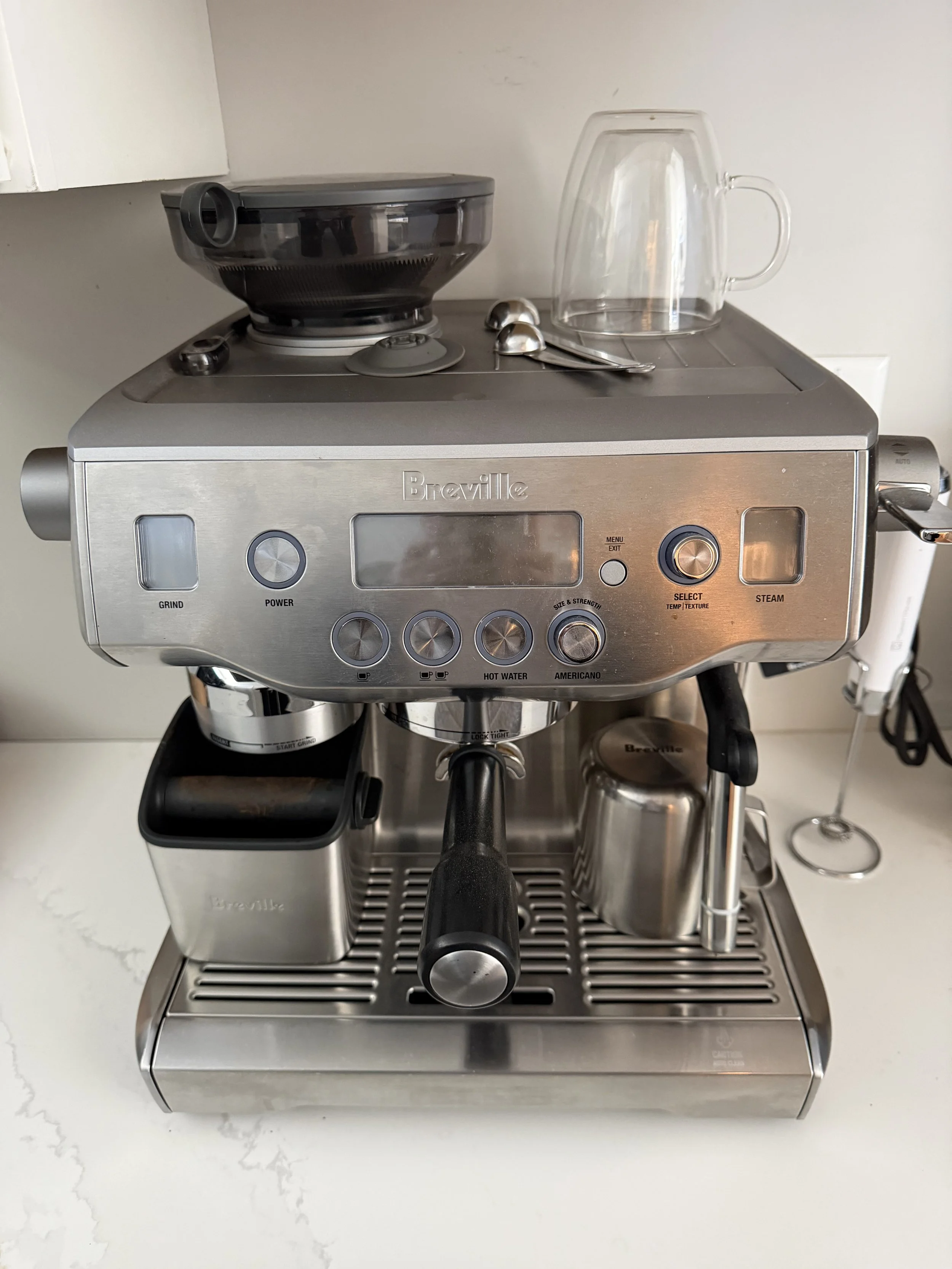
The OG. Aaron’s gift to himself when he got his job with Apple in Jan 2021.
The first one gave us 5 years of return.
It was with us through two cross-country moves and made at least 5,000+ shots of espresso.
And saved us an embarrassing amount of Starbucks money. (Aaron did the math, it would have been close to 20k!)
It paid us back over and over. Not just in money but in time, ease, and those little everyday moments that matter. It would’ve cost more to not replace it. Because the investment isn’t always about dollars.
It’s about what that investment gives you back in your life. And that’s kind of like coaching.
Sure it’s a financial investment but most women don’t realize what coaching can give them back in their life.
Not in dollars but in your day to day life.
Coaching gives you space to be human without beating the shit out of yourself for it. It’s not about becoming someone else. It’s about becoming more you — with more compassion, awareness, and choice. Not because you never spiral or have a hard day again, but because the grip loosens. You notice it faster. You pause sooner. You stop making it mean something is wrong with you.
So instead of these patterns running your life in the background, on autopilot, you can see them.
Name them. Normalize them. And choose something different.
I personally have been paying for coaching since 2020.
It started as this strong pull that something needed to change in my marriage, in my life, in my relationship with myself.
And now it’s become about so much more.
It helped me stop being controlled by:
• blaming everything outside of me
• living in resentment
• unspoken expectations in my marriage
• carrying everyone else’s emotions
• diet culture noise
• emotional eating and coping
• all-or-nothing thinking
• my inner critic running the show
• mom guilt and perfectionism
• old generational patterns
• victim mindset
• waiting for confidence
• outsourcing decisions
• chasing happiness “later”
And I’ve watched my clients experience these same shifts too.
Now, it’s not that these things never show up… hello. I’m human.
Coaching didn’t remove the challenges or thoughts. It removed their power. And gave me mine back.
When I have those moments, I now have tools + support that I didn’t have before.
And the version of me six years ago compared to the version of me today is unrecognizable, in the best way.
Now I just deal with new challenges on a new level. (new levels of growth = new challenges.)
And honestly, I really like this level and love where it’s headed.
Me personally, I LOVE talking to my coach regularly.
And I’m confident to say some of my clients are the same.
Some renew again and again.
Some work with me for six months and feel complete.
Some do a maintenance package and stay connected, just less often.
Because having someone to talk to isn’t just a “fix my life” thing.
It’s:
support
accountability
a place to process real life
a space where you don’t have to do everything alone
someone who helps you see your blind spots with compassion
For a lot of women, coaching becomes part of how they take care of themselves.
Like the gym. Like a mental reset.
Not because something is wrong but because life keeps on life-ing and support is powerful.
Just like this espresso machine…coaching is the kind of support that keeps paying you back in how you show up in your life, your relationships, and in your own head.
Not because everything becomes perfect but because you stop spending the next five years in the same loop. And that kind of return is something you can’t put a price tag on.
Looking for this kind of support? I got you. Let’ chat.
Just Because Your Inner Critic Is Loud Doesn’t Mean She’s Accurate

A common pattern I see in women I coach…
Their brain is very good at telling convincing, and not so nice, stories, especially about themselves.
And they assume that if a thought shows up, it must be true.
That’s how spirals start.
A single thought turns into interpretation. Interpretation turns into meaning.
Meaning turns into a story that feels factual, even when it isn’t.
The work isn’t arguing with your thoughts or trying to “think positive.”
That usually just creates more resistance.
The real shift happens when you learn how to pause the story before you add another chapter.
When you slow it down, you can relate to your thoughts with curiosity instead of self-criticism.
You can decide whether a thought actually deserves your attention or whether it’s just mental noise.
This is the kind of work we do together in 1:1 coaching.